
Histoires de famille NARS1 - La famille Anderson, États-Unis
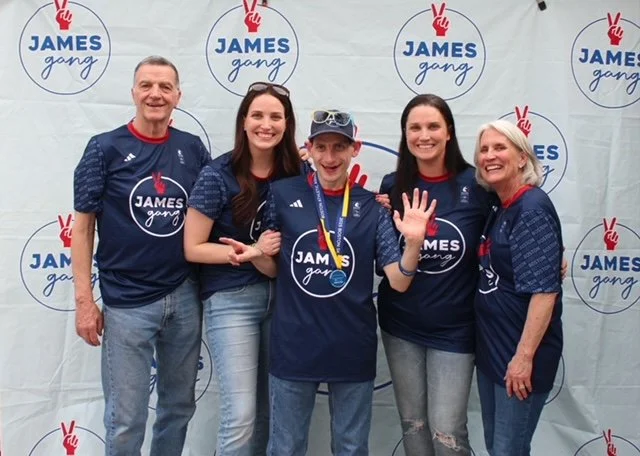
James a 34 ans et vit chez ses parents, Nancy et Bud, à Bedford, Massachusetts. Il est au milieu de trois enfants, avec une sœur aînée, Lauren, et une sœur cadette, Taylor.
Il est actuellement le membre le plus âgé connu de la communauté NARS1.
La vie de famille est différente aujourd’hui de ce qu’elle était autrefois. Leur maison était occupée et bruyante quand les filles étaient plus jeunes. Maintenant, c'est plus calme, avec seulement eux trois à la maison au quotidien. Mais ce qui n’a pas changé, c’est la joie que James apporte aux gens qui l’entourent. Il est heureux, sociable et plein de personnalité.
“James n'a jamais rencontré d'étranger.”
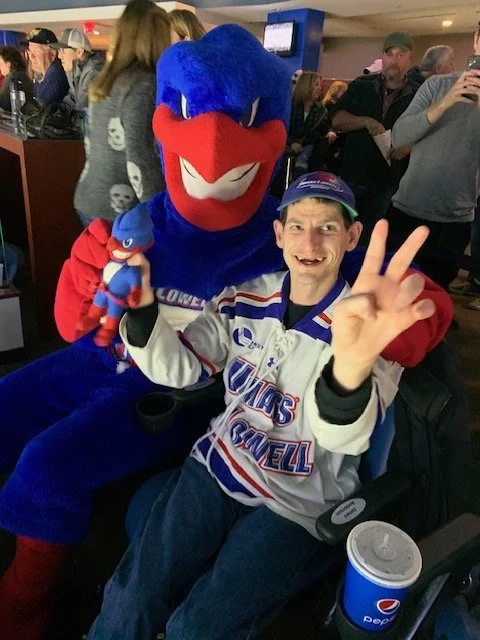
James adore être en déplacement, surtout lorsqu'il s'agit de sport ou de musique. Il compte les jours jusqu'aux matchs de hockey universitaire, où il applaudit bruyamment, applaudit plus longtemps que quiconque et surveille de près la mascotte de l'équipe, Rowdy, qui vient souvent lui dire bonjour. Il aime également les matchs locaux de basket-ball et de football, surtout lorsqu'il peut voir des amis et des visages familiers.
La musique est une autre grande partie de son monde. Il a deux groupes irlandais préférés, et quand ils jouent localement, vous le trouverez généralement là-bas — applaudissant, chantant et parfois même étant invité à “chanter” une chanson avec eux.
Les premiers jours
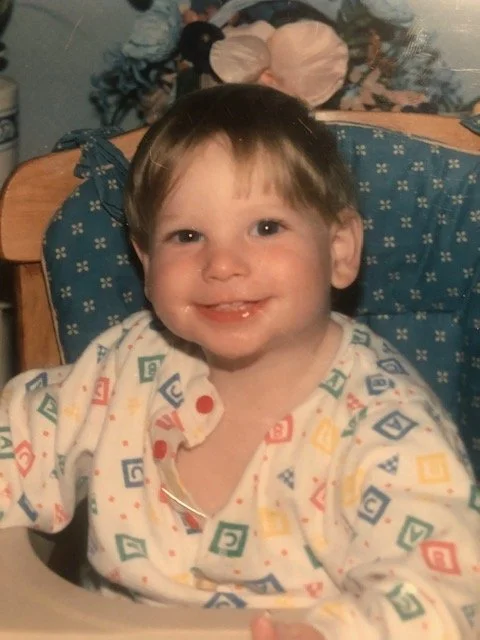
James est né avec une microcéphalie et a eu du mal à prendre du poids très tôt. De la
Au début, il y avait des signes que quelque chose n'allait pas. Visites hebdomadaires à la
Le pédiatre est devenu partie intégrante de la vie et, à l'âge de 10 mois, James a eu sa première neurologie
rendez-vous après avoir manqué des étapes clés.
À ce stade, tout était incertain. Les analyses n'ont pas été concluantes et James a été étiqueté comme étant globalement retardé. Comme beaucoup de familles, Nancy et Bud gardaient l’espoir qu’avec le soutien approprié, il pourrait rattraper son retard.
Il a commencé l’intervention précoce, avec une thérapie physique et professionnelle à domicile et à l’hôpital. Les progrès sont venus, mais lentement. James rampait à 15 mois et marchait à 21 mois, et au fil du temps, il est devenu évident que l’écart entre son âge et son développement se creusait.
Au fil des années, James a été soutenu par des neurologues, des orthopédistes et des gastro-entérologues, ainsi que par l'orthophonie, l'OT et la PT tout au long de ses années scolaires. Il a évolué dans différents milieux éducatifs jusqu'à ce qu'il quitte le système scolaire public à 22 ans.
Malgré tout cela, un diagnostic est resté hors de portée pendant de nombreuses années.
Ce n’est qu’à l’âge de 29 ans que James a finalement eu une réponse.
“Nous pensions que nous n’en aurions jamais.”
Le diagnostic est venu d'un généticien du Boston Children's Hospital. Une fois qu’ils ont commencé à lire sur NARS1, tout a commencé à avoir du sens.
“Une fois que nous avons lu quelque chose sur NARS1, c'était incroyablement validant. Beaucoup des problèmes rencontrés par James au fil des ans étaient liés à NARS1, et soudain, les choses ont pris beaucoup plus de sens pour nous.”
Et tout aussi important, cela les a conduits à la communauté NARS1.
“Nous avons finalement rencontré des familles en ligne avec des enfants comme James. Nous nous sommes sentis soutenus et avons rencontré les familles les plus merveilleuses !”
La vie quotidienne

James participe désormais à un programme de jour de 9h à 15h, avec transport assuré. À la maison, il a besoin de soutien dans la plupart des aspects de la vie quotidienne, notamment l’habillage, l’alimentation, la mobilité et les soins personnels.
La routine joue un grand rôle dans sa vie. Les choses ont tendance à suivre un rythme familier, et il trouve du réconfort en sachant ce qui va suivre.
Les matins commencent tôt. Avec du soutien, il se prépare pour la journée avant de s'installer avec le petit-déjeuner et les nouvelles sportives. Les soirées sont plus lentes — regarder la télévision, souvent Seinfeld (qu'il appelle “l'émission de maman”), ou regarder des vidéos et des photos sur son iPad. Une chose qui ressort est le degré de réconfort dont James a besoin quant à ce qui va suivre.
“Il demande encore et encore ce qui se passe demain et ce qu'il fera. Peu importe combien de fois nous répondons, il demande toujours à nouveau.”
Cela fait partie de sa routine et de la façon dont il donne un sens au monde qui l’entoure.
Les week-ends sont un peu plus flexibles, mais toujours façonnés par le même besoin de structure et de familiarité.
Les défis
Certains des aspects les plus difficiles sont les exigences constantes des soins quotidiens. James ne peut pas être laissé seul, ce qui signifie que quelqu'un est toujours avec lui. Au fil du temps, cela est devenu normal pour la famille, mais elle peut toujours se sentir isolante, d’autant plus que la vie change naturellement pour les autres autour d’elle.
“Nous ne voyageons pas et ne sortons pas sans James. Même si nous nous y sommes adaptés au fil des années, cela peut parfois sembler difficile et isolant.”
Il existe également des défis permanents en matière de soins, notamment en matière de toilettes et de communication, qui nécessitent une sensibilisation et un soutien constants.
Regarder vers l’avenir apporte son propre poids. Nancy et Bud pensent désormais à l’avenir d’une manière très réelle — à ce qui se passe lorsqu’ils ne sont plus en mesure de fournir le niveau de soins dont James a besoin chaque jour.
“Nous savons que personne ne prendra soin de lui comme nous le faisons, mais à un moment donné, il devra probablement faire la transition vers une maison de retraite avec assistance. Ce sera une transition incroyablement difficile pour toutes les personnes impliquées.”
Plus récemment, ils ont également remarqué des changements dans le comportement de James’. Des situations nouvelles ou inconnues peuvent provoquer de l’anxiété, et il faut du temps, de la patience et du réconfort pour l’aider à traverser ces moments.
Ce qui apporte de la joie
Malgré les défis, il y a tellement de joie chez James. Il a un grand sourire et une façon de rassembler les gens. Il fait impression partout où il va, que ce soit lors d'un match, dans un restaurant ou simplement dans la communauté.
“Vous ne pouvez pas vous empêcher de vous sentir heureux lorsque vous êtes avec lui avec son immense sourire et son amour de la vie.”
Nancy le décrit comme quelqu’un qui fait ressortir le meilleur des gens.
Un souvenir qui ressort est une simple soirée entre amis dans un restaurant où jouait l’un de ses groupes préférés. Voir d'autres personnes se connecter avec James et vraiment apprécier d'être avec lui est resté avec Nancy longtemps après.
“Ces souvenirs nous aident beaucoup quand les choses deviennent difficiles.”
Soutien et communauté
Le soutien est venu de nombreux endroits au fil des ans — famille, amis et communauté au sens large.
James est bien connu localement, souvent reconnu lors des matchs et accueilli par des high-fives ou un rapide bonjour. Sa famille élargie a également joué un rôle énorme, en collectant des fonds et en soutenant des initiatives qui font une différence non seulement pour James, mais aussi pour d’autres.
Plus récemment, trouver la communauté NARS1 a été incroyablement significatif.
“On a l'impression qu'on les connaît depuis des années.”
Rencontrer d’autres familles — des personnes qui comprennent vraiment — a apporté du réconfort, des encouragements et un sentiment de connexion qui n’existait pas auparavant.
Regard vers l'avenir
Comme beaucoup de familles, Nancy et Bud sont à la fois optimistes et incertains. Leur plus grand espoir est simple : que James soit heureux, en sécurité et soutenu, maintenant et dans le futur.
Lorsqu’on leur demande ce qu’ils diraient à une autre famille qui vient de commencer ce voyage, leur message est honnête.
“Je pense qu'il est important de se donner le temps de faire son deuil lorsque ces sentiments surviennent, et de ne pas se sentir coupable de se sentir ainsi. C'est une perte — ce n'est pas la vie que vous avez imaginée pour vous-même ou pour votre enfant — et vous avez le droit de faire votre deuil.”
Mais à côté de cela, il y a aussi tellement de choses à retenir — les moments, les connexions et l’impact en cours de route.
“Il a eu un impact tellement positif sur nous tous, et nous nous sentons incroyablement bénis qu’il soit notre fils et notre frère.”